MindSlate
A minimal productivity app designed to make daily task management clearer, faster, and more meaningful.
00

problem
Most modern to-do applications prioritize feature expansion over simplicity, resulting in cluttered dashboards and complex workflows. For users managing everyday tasks, this added complexity increases cognitive load and reduces clarity. There is a need for a minimal, distraction-free task management experience that allows users to quickly capture, organize, and complete tasks without unnecessary friction.
solution
MindSlate provides a simple and easy-to-use task management experience focused on clarity and ease of use. The platform emphasizes key features, such as quick task capture, organized lists, and clear completion states. It intentionally omits unnecessary features that complicate the process. With straightforward user flows, a strong visual structure, and a distraction-free design, MindSlate helps users manage daily tasks effectively and develop consistent productivity habits without overwhelming their minds.
MindSlate was created to solve a common problem: many task management apps overwhelm users with unnecessary features and messy interfaces. While these tools aim to help with organization, they often add to the mental strain for users who want a simple way to handle daily tasks. The goal was to create a clean, distraction-free task management experience that prioritizes clarity, ease of use, and simple structure. MindSlate focuses on reducing friction and helping users stay consistent without feeling mentally overloaded.

Understanding the User
The idea for MindSlate came from noticing how users struggle to stay productive with complicated dashboards and too many customization options. By looking at competitors and observing users, it became clear that those managing daily tasks favored speed, clarity, and fewer decisions. Research showed that users prefer quick task entry, clear task states, and simple visuals over complicated features. They did not need more functions; rather, they needed better organization and cleaner interactions.
Design Approach
The design aimed to simplify the task management process into easy, straightforward steps. Key actions like adding tasks, organizing lists, and marking completion were made to require little effort. Each screen was designed to keep visual balance, remove unnecessary elements, and help users navigate the platform easily without distraction or confusion.
Key Design Decisions
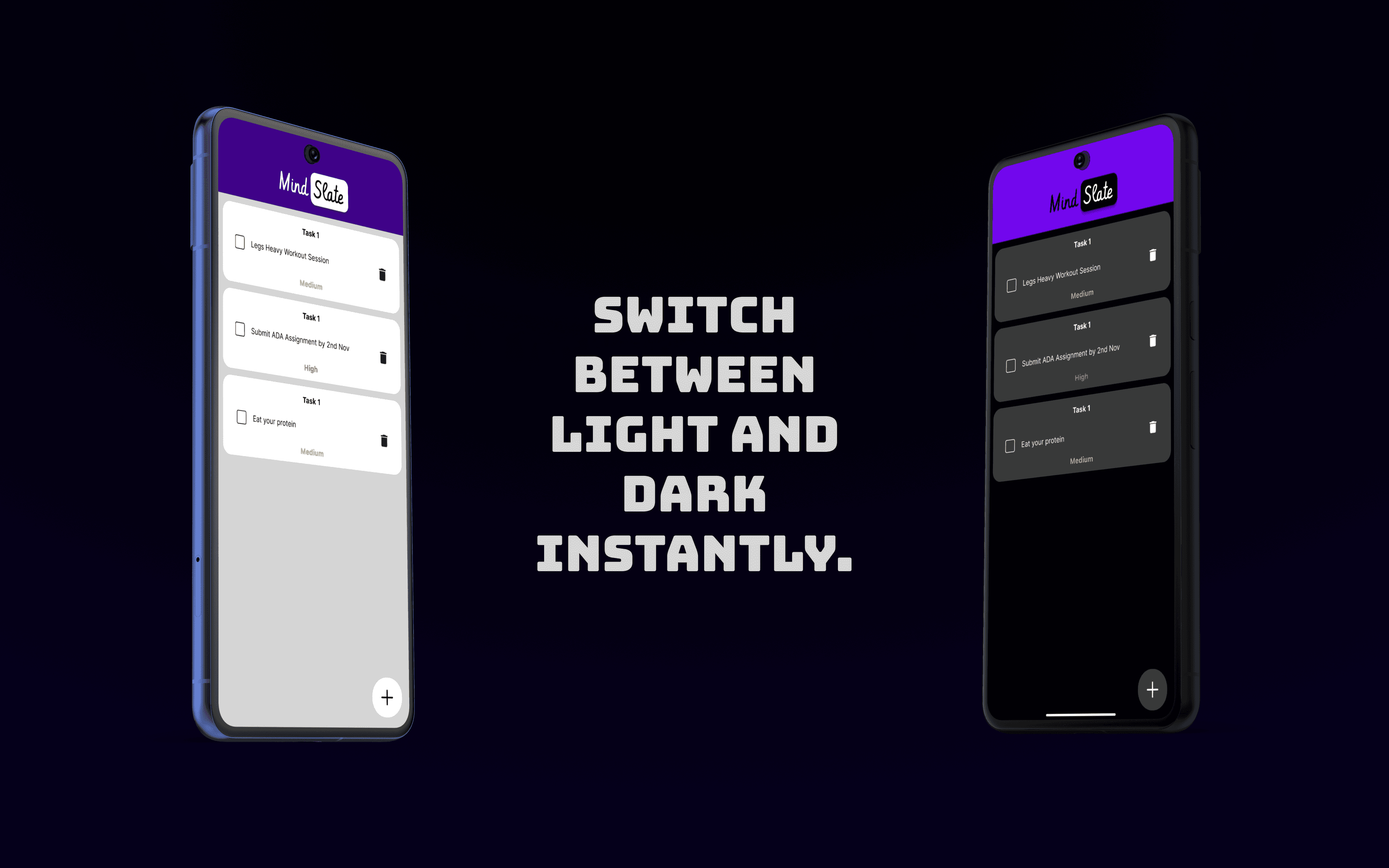
The interface focuses on key features on each screen to reduce cognitive load. Strong typography, ample spacing, and a clean grid system help create visual hierarchy and clarity. Task states (active, priority, completed) are clearly defined to support progress tracking. A simple color palette keeps users focused while subtle feedback for interactions makes task completion satisfying.
Outcome
The final design provides a lightweight and targeted task management experience that promotes clarity and consistency in daily use. By cutting down on unnecessary features and emphasizing simple structure, MindSlate helps users manage tasks effectively without feeling overwhelmed.
Learnings
This project highlighted the importance of intentional simplicity in productivity tools. Creating fewer but more meaningful interactions can greatly enhance usability and help users develop sustainable habits without distractions.
01
see also